Key takeaways
- The 53 cm (21") scarf is the versatile everyday size for the neck, hair, wrist and bag.
- The 90 cm (35") square has nearly three times the fabric, enough for shawls, generous neck knots and head wraps.
- Hand wash silk twill in cool water with a mild detergent, roll it in a towel instead of wringing, and iron on low on the reverse.
- Real silk feels smooth, warms quickly against the skin and has a soft luster that shifts with the light.
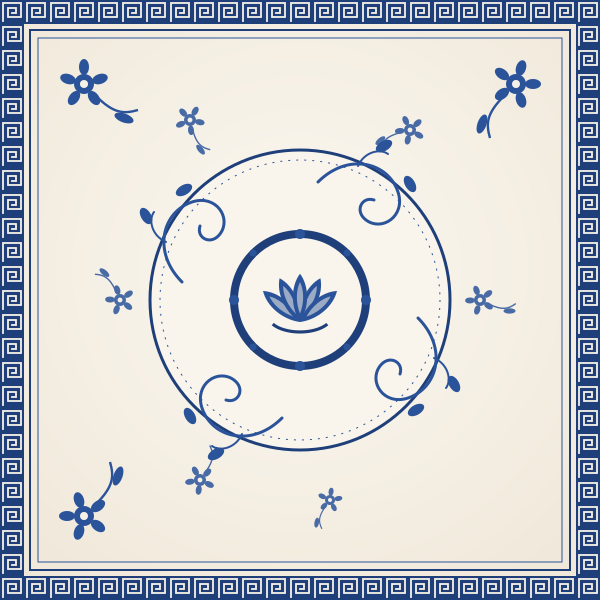
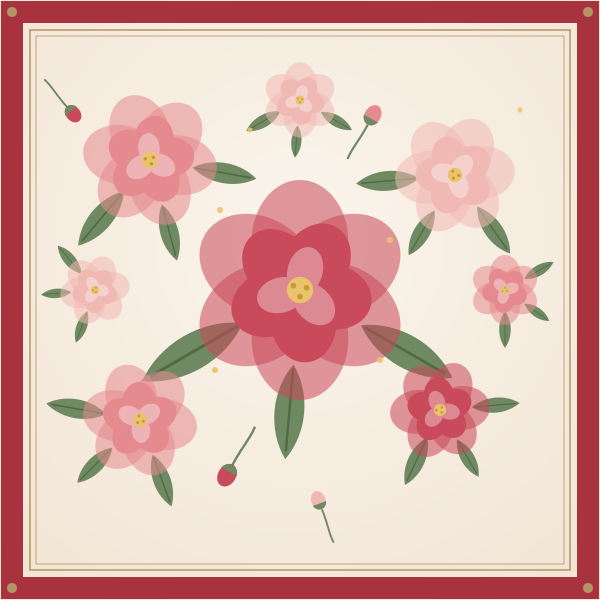
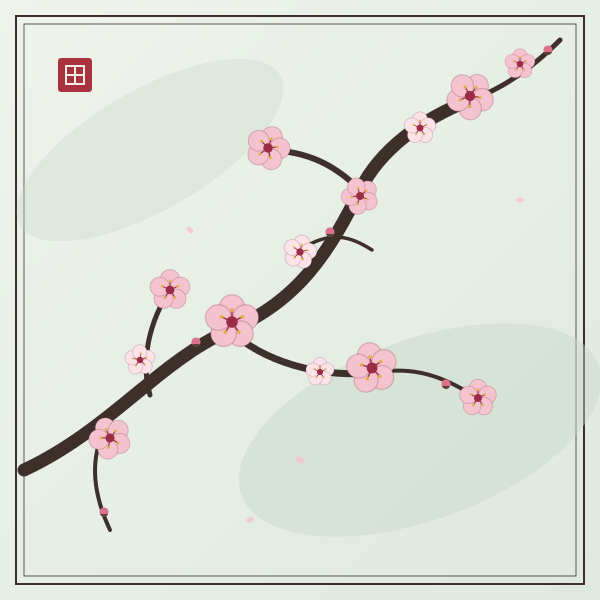
- Our four designs draw on Chinese symbolism: blue-and-white porcelain, peony, plum blossom, and crane and cloud.
What is the difference between a 53 cm and a 90 cm silk scarf?
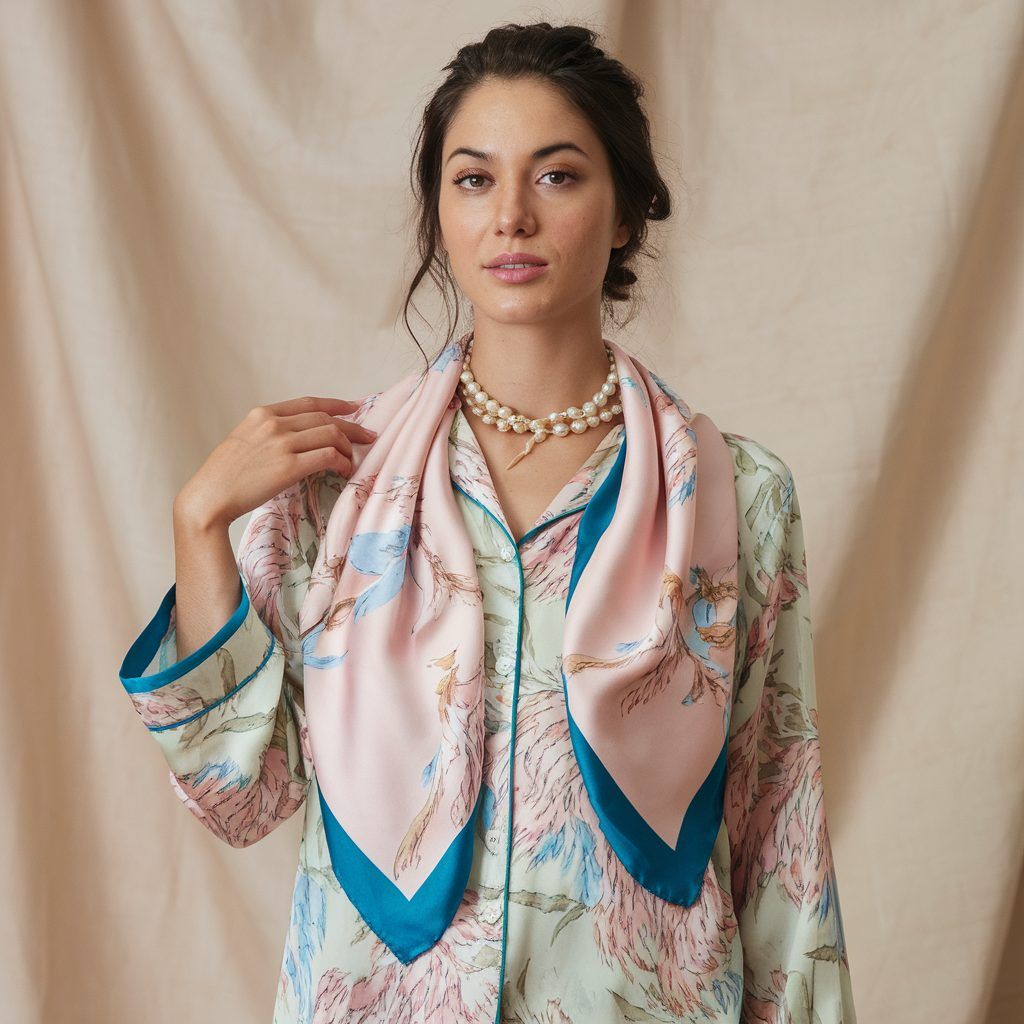
The difference is how much fabric you have to work with. A 53 × 53 cm (21") scarf, often called a bandana size, is compact and quick to tie. A 90 × 90 cm (35") square has nearly three times the surface area, enough to wrap around the shoulders or make a generous knot. Both of our sizes are 100% silk twill, digitally printed with our original designs and a monogram or name in the corner.
| Feature | 53 × 53 cm (21") | 90 × 90 cm (35") |
|---|---|---|
| Best for | Neckerchief, hair, bandana, bag handle, wrist | Shawl, large neck knot, head wrap, belt |
| Look | Neat, modern, easy to wear casually | Fuller, classic and polished |
| Folded into a triangle | Sits close at the neck with a small knot | Drapes over the shoulders or knots loosely at the front |
| Good for someone who | Is new to silk scarves or prefers small accessories | Already loves scarves or wants a statement piece |
How do you wear a 53 cm silk scarf?
- Neckerchief. Fold into a triangle, roll from the long edge toward the point into a narrow band, then tie a small knot at the side of the neck.
- Ponytail wrap. Fold into a band, tie it around a hair elastic and let the ends fall.
- Headband. Fold into a band about 5 cm wide and knot it at the nape, under or over your hair.
- Bandana. Fold into a triangle, place it over the hair with the point at the back, and tie at the nape.
- Bag accent. Knot it around a handle, or wrap the handle from end to end for a flash of color.
- Bracelet. Fold into a slim band, wrap it twice around the wrist and tie.
How do you wear a 90 cm silk scarf?
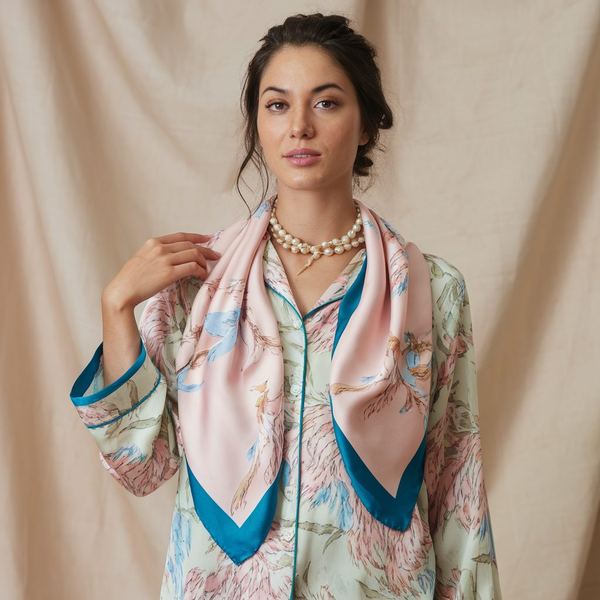
- Square fold over the shoulders. Fold corner to corner into a triangle, drape it with the point at your back, and knot the ends loosely at the front.
- Shawl. Open the scarf over your shoulders on a cool evening or over a sleeveless dress.
- Classic neck knot. Fold into a long band, loop it around the neck and tie a soft knot or bow to one side.
- Head wrap. Fold into a triangle, place it over the hair, cross the ends at the nape and tie them at the top or back.
- Belt. Fold into a narrow band, thread it through belt loops and knot it at the hip.
- Tote tie. Knot it through both handles of a larger bag so the print shows.
In either size, the way you fold decides whether the monogrammed corner shows or tucks discreetly away.
How do you care for a silk twill scarf?
Silk twill is more resilient than it looks, but it rewards gentle handling. Follow any care instructions included with your scarf, and as a general guide:
- Hand wash cool. Use cool or lukewarm water, no warmer than about 30°C (86°F), with a mild, pH-neutral detergent for silk or delicates. Wash it on its own.
- Be brief and gentle. Swish for a few minutes; don't soak it for long, scrub it or use bleach.
- Rinse in cool water until the water runs clear.
- Never wring or twist. Lay the scarf on a clean towel, roll it up and press to remove water.
- Dry flat or hang away from direct sunlight and heat.
- Iron low on the reverse. Use the silk setting while the scarf is slightly damp, or place a cotton cloth between the iron and the silk.
Apply perfume and hairspray before you put on your scarf, not after, and store it folded or loosely rolled in a breathable bag. Professional dry cleaning is also an option for an occasional refresh. As with most printed silk, the reverse side is usually a little lighter than the face.
How can you tell if a silk scarf is real silk?
- Read the label. Look for "100% silk." Words such as "satin," "silky" or "silk feel" describe a weave or a finish, not the fiber.
- Feel it. Real silk is smooth and soft, may feel cool at first and warms quickly against your skin.
- Watch the light. Silk has a soft, pearly luster that shifts as the fabric moves, while many synthetics have a flatter, uniform shine.
- Look at the weave. Silk twill shows fine diagonal lines on close inspection, which give it a soft sheen rather than a glassy shine, and a substantial drape.
- Burn test, as a last resort. Burn a single loose thread safely over a sink, never the scarf itself. Silk smells like burning hair and leaves a crumbly ash; polyester melts into a hard bead and smells of plastic.
What do the motifs on our silk scarves mean?
Each of our four designs draws on a symbol with a long history in Chinese art.
Blue-and-white porcelain
Cobalt-blue painting under a clear glaze was perfected in Jingdezhen during the Yuan dynasty in the 14th century. Blue-and-white porcelain then traveled the world by sea and inspired imitators as far away as Delft in the Netherlands. Our Blue Porcelain Silk Scarf celebrates that crisp, timeless palette and the craftsmanship it represents.
Peony
Called the "queen of flowers" in China, the peony symbolizes prosperity, honor and wealth, and has been celebrated in painting and poetry since the Tang dynasty. The Peony Garden Silk Scarf carries that wish for a full, flourishing life.
Plum blossom
Plum trees flower in late winter, often while snow still clings to the branches, so plum blossom stands for resilience, perseverance and hope. With pine and bamboo, it is one of the "Three Friends of Winter." The Plum Blossom Silk Scarf is a quiet tribute to strength through hard seasons.
Crane and cloud
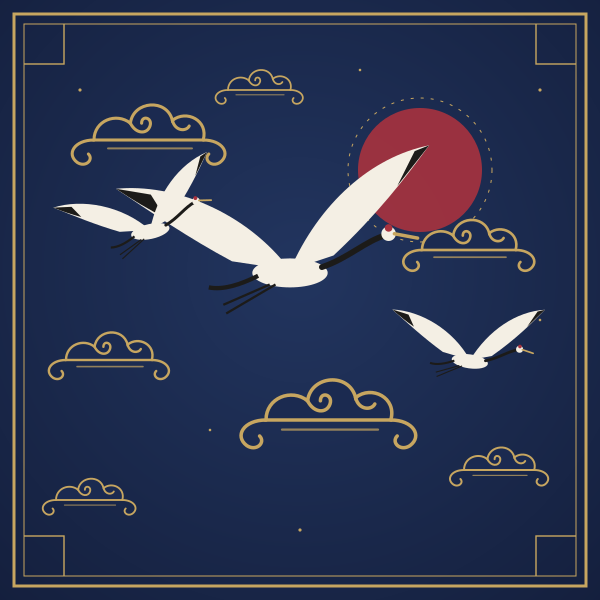
The crane is one of the great symbols of longevity in Chinese art, and auspicious clouds represent good fortune and blessings from heaven. Together on the Crane & Cloud Silk Scarf, they express a wish for a long and lucky life, a thoughtful message for a milestone birthday.
Which size should you choose as a gift?
If you are unsure, choose 53 cm: it is the easiest size to wear straight away and suits almost any style. Choose 90 cm for someone who already wears scarves, for a milestone birthday or anniversary, or when you want the full design to be the star. Either way, the monogram or name in the corner makes it hers.
Find her scarf
Browse our silk scarves to compare all four designs in both sizes, or explore more gifts for her. Each scarf is digitally printed on 100% silk twill to order with the monogram or name you choose, so add her initials and give her something she can wear for years.
Frequently asked questions
Is a 53 cm or 90 cm silk scarf better?
Neither is better; they do different jobs. A 53 cm (21") scarf is easier for everyday styles such as a neckerchief, hair tie, bandana or bag accent. A 90 cm (35") square has enough fabric for a shawl, a generous neck knot or a head wrap. If you are buying someone her first silk scarf, 53 cm is the easiest to wear.
How do you wash a silk twill scarf?
Hand wash it on its own in cool water with a mild, pH-neutral detergent for silk or delicates. Swish gently, rinse in cool water, and never wring or twist. Roll it in a clean towel to remove water, dry it flat away from direct sun, then iron on a low silk setting on the reverse side.
How can I tell if my scarf is real silk?
Start with the label, which should say 100% silk. Real silk feels smooth and soft, warms quickly against your skin and has a soft luster that shifts in the light. A burn test on a single loose thread is a last resort: silk smells like burning hair and leaves crumbly ash, while polyester melts into a hard bead.
What does a peony symbolize in Chinese culture?
In Chinese culture the peony is known as the queen of flowers and symbolizes prosperity, honor and wealth. It has been celebrated in painting and poetry since the Tang dynasty and often appears in designs for weddings and celebrations. A peony motif is a gracious way to wish someone a full, flourishing life.
What do cranes and clouds symbolize in Chinese art?
The crane is one of the most important symbols of longevity in Chinese art, often linked with wisdom and grace. Auspicious clouds represent good fortune and blessings from heaven. Together, a crane and cloud design expresses a wish for long life and good luck, which makes it a thoughtful choice for birthdays and milestone celebrations.